
When designing a wine cellar, racking is one of the biggest decisions you’ll make—because it impacts capacity, aesthetics, bottle accessibility, and long-term durability. The right choice depends on how you collect, how you entertain, and the overall look you want for your home.
Below is a clear breakdown of the most popular wine racking options—wood, metal, modular systems, and fully custom builds—with the real-world pros and cons of each.
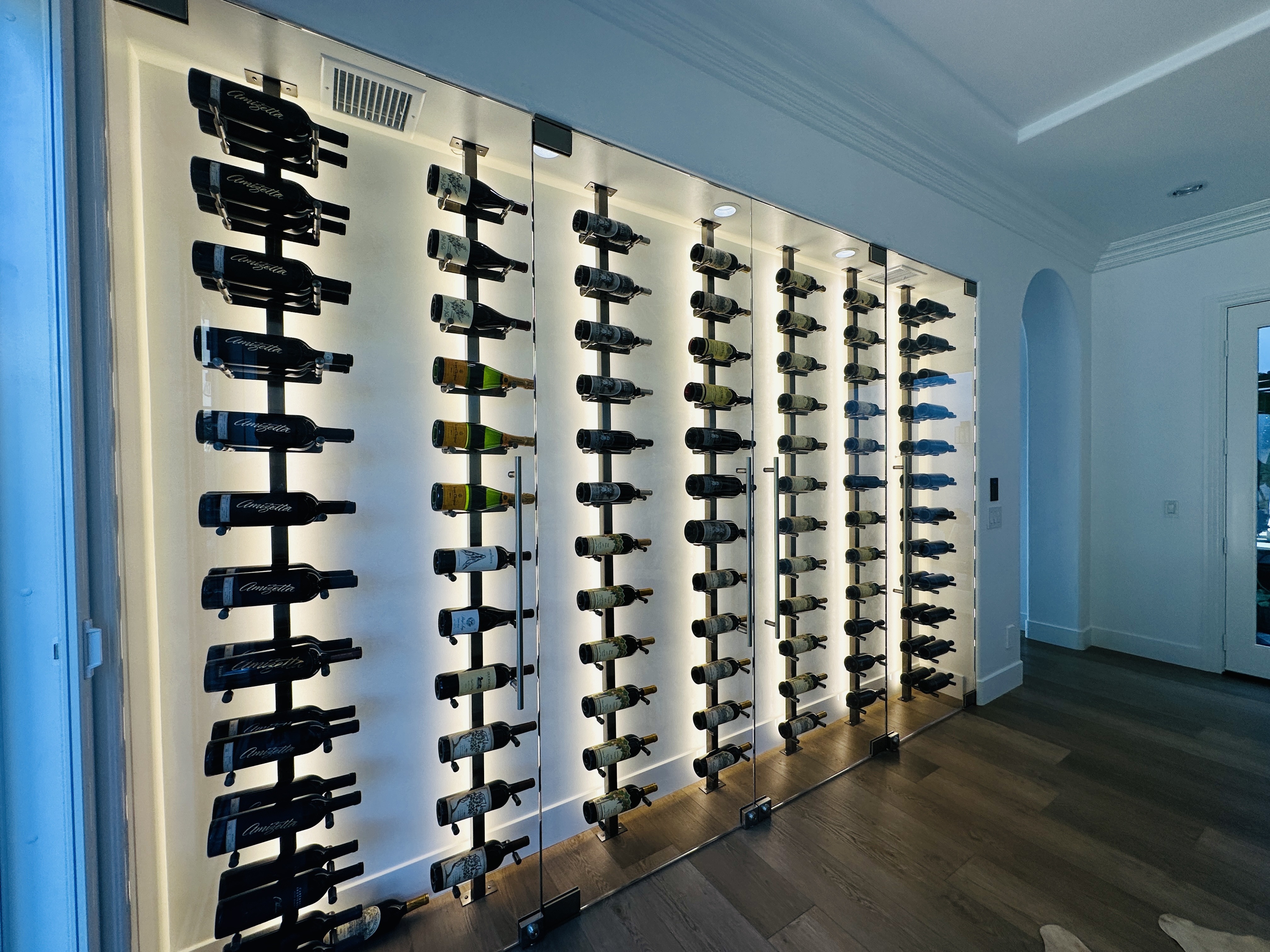
1) Wood Wine Racks (Traditional + Timeless)
Wood racking is the classic choice for wine cellars, especially for collectors who love a warm, traditional look.
Pros
-
Timeless aesthetic: Adds warmth and a “true cellar” feel.
-
Great for long-term storage: Holds bottles securely with minimal vibration.
-
Highly customizable: Can be stained to match cabinetry, floors, or home finishes.
-
Quiet, stable structure: Especially when properly anchored and built.
Cons
-
Can be sensitive to humidity swings: Poor humidity control can cause warping or swelling.
-
More maintenance in humid environments: Coastal regions (like Newport Beach) require proper vapor barrier, sealing, and climate control.
-
Quality varies widely: Lower-grade woods can crack, twist, or develop odors over time.
Best for: Traditional cellars, larger collections, and homeowners who want a warm, luxury finish.
2) Metal Wine Racks (Modern + Minimalist)
Metal racking has become a major design trend—sleek, architectural, and perfect for display-forward cellars.
Pros
-
Modern, clean look: Great for glass-enclosed, contemporary wine rooms.
-
Space-efficient: Slim profiles can increase visual openness and usable capacity.
-
Excellent for label-forward display: Makes it easy to find bottles quickly.
-
Resistant to moisture: High-quality finishes hold up well in controlled environments.
Cons
-
Can show fingerprints or dust: Especially in high-gloss or dark finishes.
-
May not fit every bottle shape: Some minimalist racks are better for standard bottles than Champagne or wider formats (unless designed for it).
-
Less “traditional cellar” warmth: Some homeowners prefer a softer, wood-forward look.
Best for: Modern homes, showpiece wine walls, and collectors who want easy visibility.
3) Modular Wine Racking Systems (Flexible + Efficient)
Modular racks are pre-engineered systems—often wood, metal, or hybrid—that can be installed quickly and expanded later.
Pros
-
Fast installation: Great for timelines and straightforward layouts.
-
Budget-friendly: Often lower cost than full custom builds.
-
Scalable: Easy to expand as your collection grows.
-
Clean and consistent appearance: Ideal for uniform storage.
Cons
-
Limited design uniqueness: Can look “off-the-shelf” without upgrades.
-
May not maximize space: Custom solutions usually yield more capacity in tricky corners, under stairs, or odd-shaped rooms.
-
Accessory limitations: May have fewer options for display bays, magnum storage, or tasting features.
Best for: Entry-to-mid level cellars, wine closets, or collectors who want an efficient solution with upgrade potential.
4) Fully Custom Wine Racking (Best Fit + Highest Impact)
Custom racking is specifically designed for your space, style, and collection—often combined with lighting, glass, and architectural finishes.
Pros
-
Maximizes every inch: Ideal for under-stairs builds, angled ceilings, alcoves, or tight footprints.
-
Tailored to your collection: Designed to include Champagne, magnums, cases, and label-forward display zones.
-
High-end visual impact: Built as a true feature—especially with accent walls and lighting.
-
Integrates with your home’s design: Matches cabinetry, finishes, and overall architecture for a cohesive look.
Cons
-
Higher upfront investment: You’re paying for design, fabrication, and expert installation.
-
Longer lead time: Requires planning, measurements, and coordination.
-
Quality depends on craftsmanship: Work with experienced wine cellar specialists to ensure proper fit and performance.
Best for: Luxury homes, design-forward cellars, serious collectors, and homeowners who want a true showpiece.
Hybrid Approach: The Best of Both Worlds
Many of the most beautiful cellars in Newport Beach use a hybrid racking plan, such as:
-
Wood racks for high-capacity storage + metal racks for label-forward display
-
Modular core storage + custom feature wall and lighting
-
Custom perimeter racks + center island with display and case storage
This creates a cellar that’s both practical and visually stunning.
How to Choose the Right Rack Material for Your Cellar
Ask yourself these quick questions:
-
Do I want a traditional look or a modern display?
-
Am I aging wine long-term (more storage) or entertaining often (more display)?
-
Will I store unusual bottle sizes (Champagne, magnums, cases)?
-
Do I want to expand in the future?
-
Is my cellar in a climate-sensitive area (like coastal Southern California)?
Good racking isn’t just décor—it’s part of your cellar’s performance and usability.
Final Thoughts
Choosing the right wine racking material is about aligning style, storage goals, and long-term durability. Wood offers warmth and tradition, metal brings sleek modern design, modular systems provide flexibility, and custom racking delivers the highest level of fit and finish.